

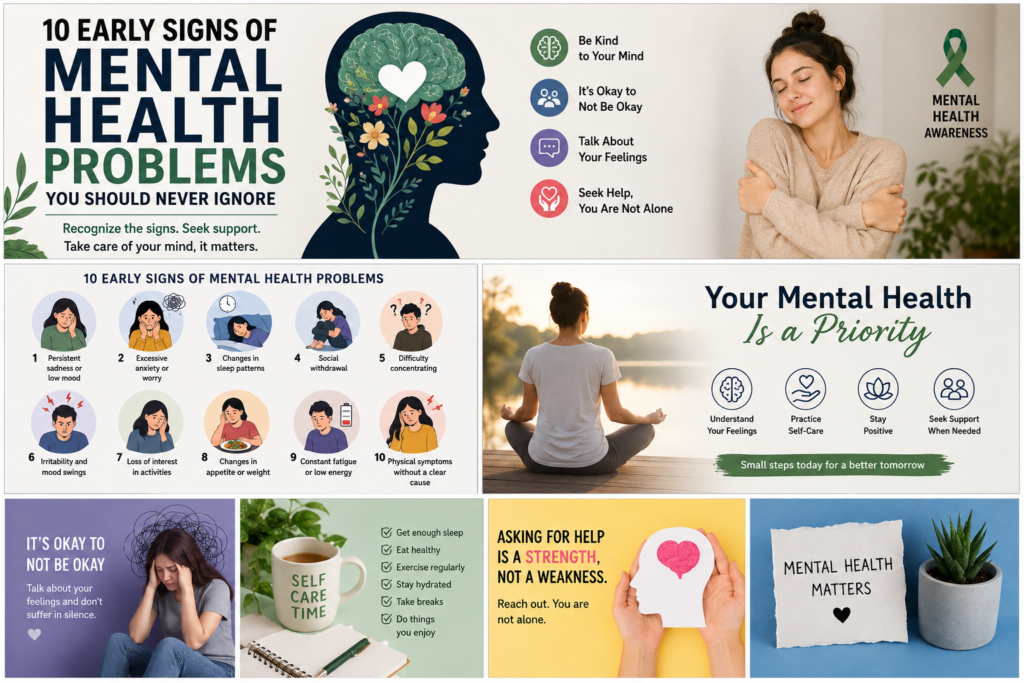
10 Early Signs of Mental Health Problems You Should Never Ignore
- May 30, 2026
- 0 Likes
- 29 Views
- 0 Comments
Introduction
Early Signs of Mental Health Problems
Mental health is an essential part of overall well-being, affecting how we think, feel, and act in our daily lives. Just as physical illnesses often show warning signs before becoming serious, mental health problems can also develop gradually. Recognizing these early signs can help individuals seek support sooner and prevent symptoms from worsening.
In this article, we will discuss 10 early signs of mental health problems that should never be ignored.
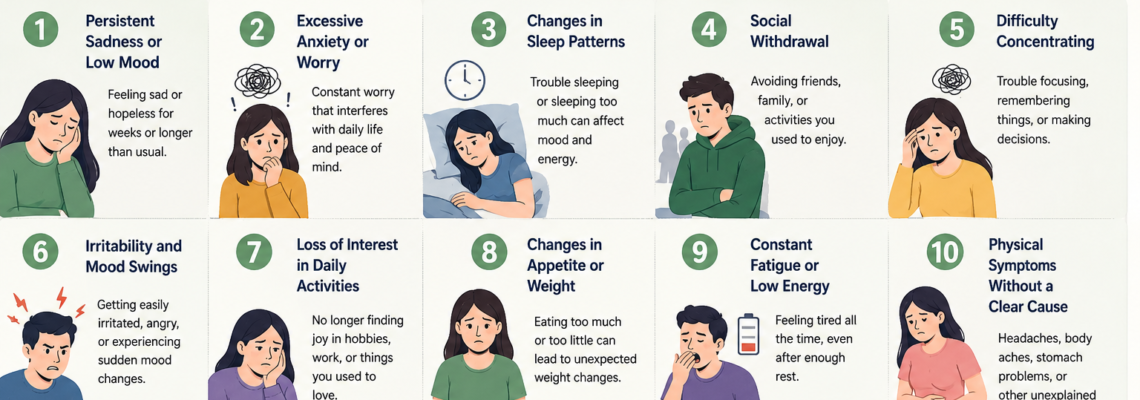
1. Persistent Sadness or Low Mood
Early Signs of Mental Health Problems
Feeling sad occasionally is normal, but ongoing sadness that lasts for weeks may indicate a mental health concern. If feelings of hopelessness, emptiness, or loss of interest in life persist, professional support may be beneficial.
2. Excessive Anxiety or Worry
Early Signs of Mental Health Problems
Constant worrying about everyday situations can interfere with work, studies, and relationships. Persistent anxiety may lead to physical symptoms such as headaches, muscle tension, and fatigue.
3. Changes in Sleep Patterns
Early Signs of Mental Health Problems
Mental health problems often affect sleep. Some individuals experience insomnia, while others may sleep excessively. Frequent sleep disturbances can impact mood, concentration, and overall health.
4. Social Withdrawal
Early Signs of Mental Health Problems
Avoiding friends, family, or activities that were once enjoyable can be an early warning sign of emotional distress. Social isolation may worsen feelings of loneliness and anxiety.
5. Difficulty Concentrating http://he World Health Organization (WHO) Mental Health page.
Early Signs of Mental Health Problems
Struggling to focus, remember information, or make decisions can sometimes be linked to stress, anxiety, depression, or other mental health challenges.
6. Irritability and Mood Swings
Sudden emotional changes, increased frustration, or frequent anger may indicate underlying mental health concerns. These symptoms can affect personal and professional relationships.
7. Loss of Interest in Daily Activities
When hobbies, social events, or daily responsibilities no longer feel enjoyable, it may signal emotional difficulties that deserve attention.
8. Changes in Appetite or Weight
Significant increases or decreases in appetite can sometimes be associated with stress, anxiety, or depression. These changes may lead to noticeable weight fluctuations.
9. Constant Fatigue or Low Energy Mental Health Awareness Gains Momentum in India in 2025
Feeling exhausted despite getting enough rest may be a sign of emotional strain. Mental health challenges often affect energy levels and motivation.
10. Physical Symptoms Without a Clear Cause
Mental health problems can sometimes present as physical complaints, including headaches, stomach discomfort, muscle aches, or unexplained pain. When no medical cause is found, emotional factors may contribute.
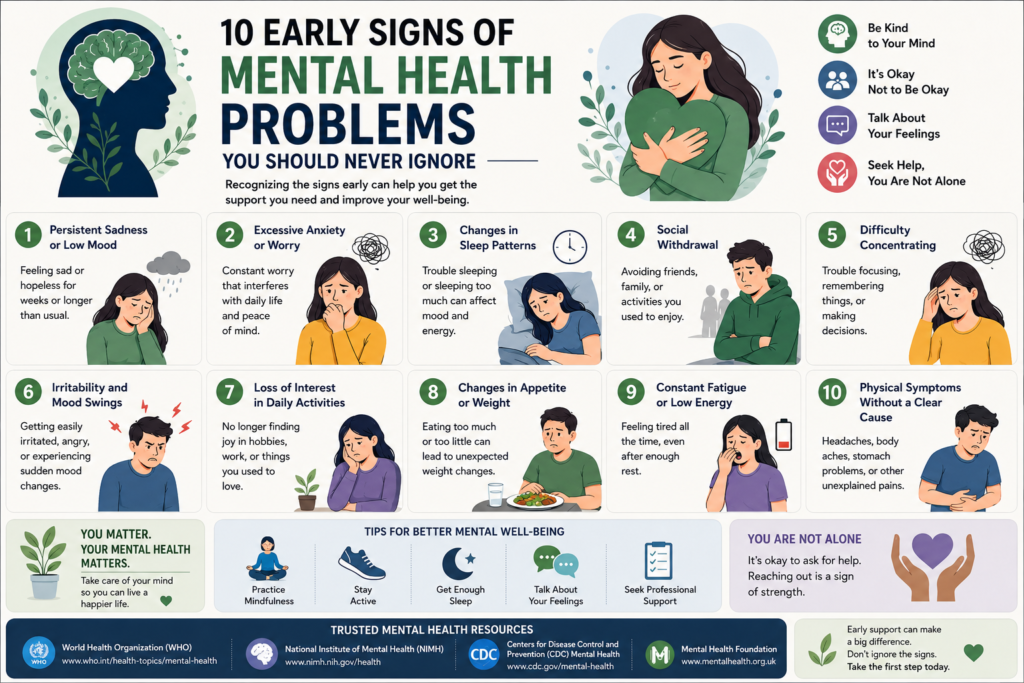
Recognizing the early signs of mental health problems is an important step toward maintaining emotional well-being. Persistent sadness, anxiety, sleep disturbances, social withdrawal, and other warning signs should not be ignored. Seeking help early can make a significant difference and support a healthier, happier life.
Practical Ways to Support Mental Wellness
Maintain a Healthy Routine
Creating a consistent daily schedule can provide structure and reduce stress.
Exercise Regularly
Physical activity helps release endorphins, which can improve mood and reduce anxiety.
Get Quality Sleep
Aim for 7–9 hours of sleep each night to support emotional and cognitive functioning.
Stay Connected
Talking to trusted friends and family members can provide emotional support during difficult times.
Practice Mindfulness
Meditation, deep breathing exercises, and mindfulness techniques can help reduce stress and improve focus.
Limit Excessive Screen Time
Too much exposure to social media and digital devices may contribute to stress and anxiety.
Mental Health Myths vs Facts
Myth: Mental health problems are rare.
Fact: Mental health conditions affect millions of people worldwide.
Myth: Seeking help means you’re weak.
Fact: Asking for help demonstrates self-awareness and courage.
Myth: Mental health problems only affect adults.
Fact: Children, teenagers, and adults can all experience mental health challenges.
Myth: Mental health issues always have obvious symptoms.
Fact: Many symptoms can be subtle and easily overlooked.


Leave Your Comment