

Introduction
How Stress Affects Your Mind and Body
Stress is a normal part of life. Whether it’s caused by school, work, relationships, finances, or major life changes, everyone experiences stress from time to time. While short-term stress can help us stay alert and focused, chronic stress can have serious effects on both mental and physical health.
Understanding how stress affects your mind and body can help you recognize warning signs early and take steps to protect your overall well-being.
What Is Stress? https://www.who.int/health-topics/mental-health
How Stress Affects Your Mind and Body
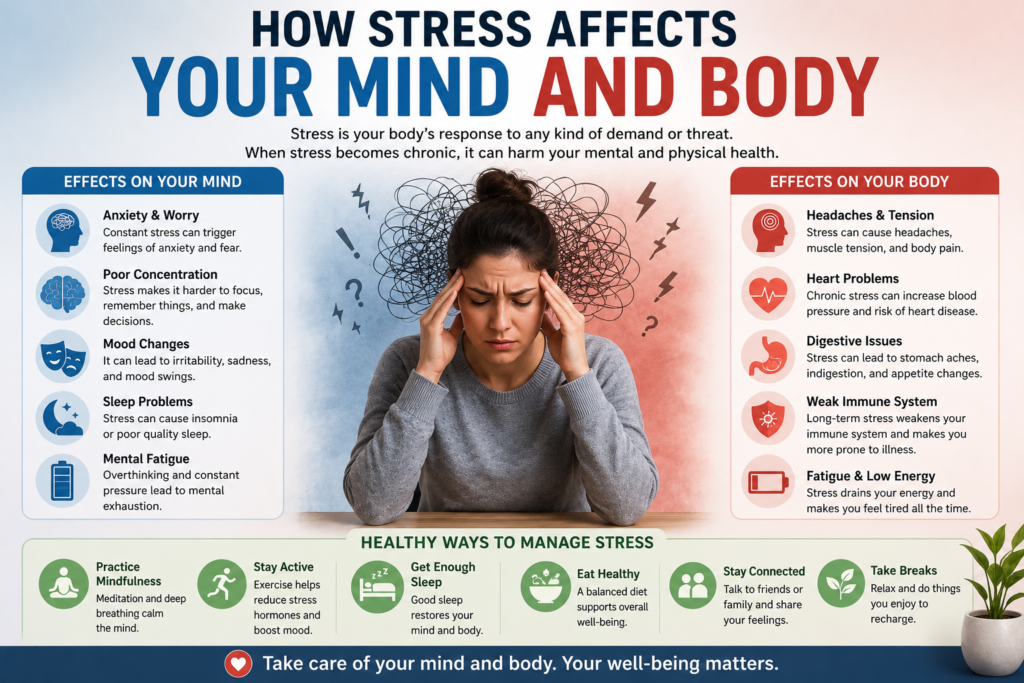
Stress is the body’s natural response to challenges, demands, or perceived threats. When you encounter a stressful situation, your body releases hormones such as adrenaline and cortisol. These hormones prepare your body for a “fight-or-flight” response.
While this response can be helpful in emergencies, prolonged stress can negatively affect many systems in the body.
How Stress Affects Your Mind
1. Increased AnxietyMental Health Awareness Gains Momentum in India in 2025
How Stress Affects Your Mind and Body
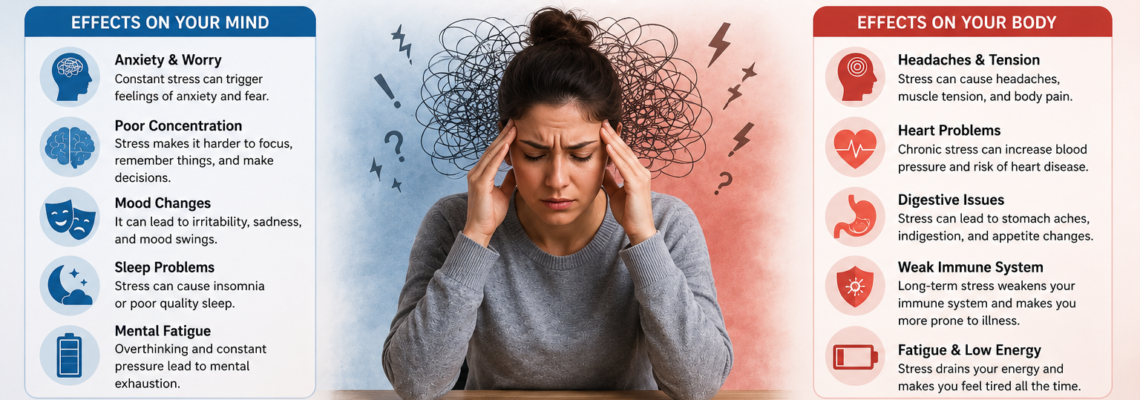
Chronic stress can make people feel nervous, worried, and overwhelmed. Persistent stress may contribute to anxiety symptoms that interfere with daily life.
2. Difficulty Concentrating
Stress can make it harder to focus, remember information, and make decisions. Many people notice reduced productivity when stress levels are high.
3. Mood Changes
Ongoing stress may lead to irritability, frustration, sadness, or emotional exhaustion. These mood changes can affect relationships and overall quality of life.
4. Sleep Problems
Stress often disrupts sleep patterns. Individuals may struggle to fall asleep, stay asleep, or wake up feeling rested.
5. Mental Fatigue
Constant stress can leave people feeling mentally drained and less motivated to complete everyday tasks.
How Stress Affects Your Body
1. Headaches and Muscle Tension
Stress frequently causes tension headaches, neck pain, and muscle tightness.
2. Heart Health
When stress hormones remain elevated for long periods, blood pressure and heart rate may increase, placing additional strain on the cardiovascular system.
3. Digestive Problems
Stress can contribute to stomach discomfort, nausea, bloating, indigestion, and changes in appetite.
4. Weakened Immune System
Long-term stress may reduce the body’s ability to fight infections, making individuals more susceptible to illness.
5. Fatigue and Low Energy
People experiencing chronic stress often report feeling tired even after getting enough sleep.
Common Signs of Too Much Stress
- Constant worrying
- Frequent headaches
- Difficulty sleeping
- Muscle tension
- Irritability
- Low energy
- Changes in appetite
- Difficulty concentrating
- Feeling overwhelmed
- Social withdrawal
Healthy Ways to Manage Stress
Exercise Regularly
Physical activity helps reduce stress hormones and improve mood.
Practice Mindfulness
Meditation, deep breathing, and mindfulness exercises can help calm the mind.
Get Enough Sleep
Aim for 7–9 hours of quality sleep each night.
Maintain a Healthy Diet
Eating balanced meals provides the nutrients needed for both physical and mental health.
Stay Connected
Talking with trusted friends and family members can provide emotional support during stressful times.
Take Breaks
Allow yourself time to relax, recharge, and engage in activities you enjoy.
When to Seek Professional Help
If stress becomes overwhelming, persists for a long time, or interferes with daily functioning, consider speaking with a healthcare professional or mental health specialist. Early support can help prevent stress from developing into more serious health concerns.
Conclusion
How Stress Affects Your Mind and Body
Stress affects both the mind and body in powerful ways. While occasional stress is normal, chronic stress can impact mental well-being, sleep quality, heart health, digestion, and overall quality of life. By recognizing the signs of stress and practicing healthy coping strategies, individuals can protect their health and improve their overall well-being.


Leave Your Comment