

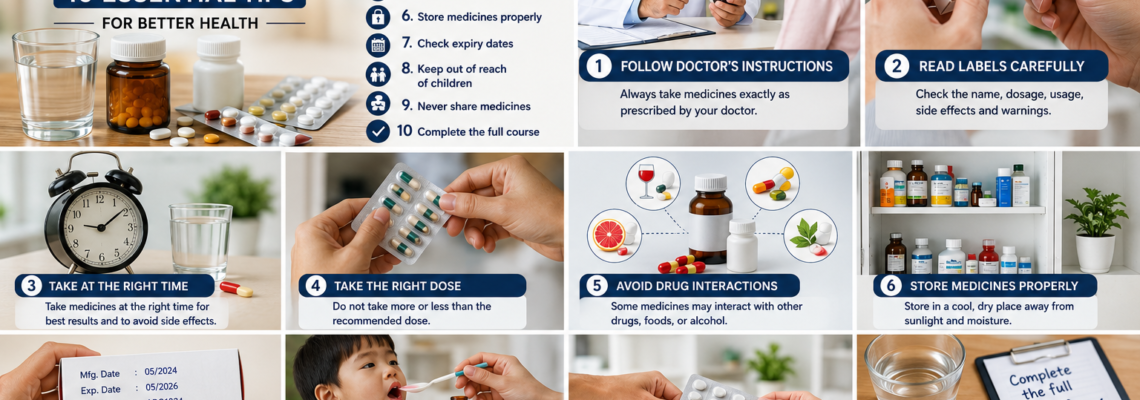
How to Take Medicines Safely: A Complete Guide
- June 10, 2026
- 0 Likes
- 25 Views
- 0 Comments
Introduction
How to Take Medicines Safely
Medicines play an important role in treating illnesses, managing chronic conditions, and improving overall health. However, taking medicines incorrectly can reduce their effectiveness and may even cause serious health problems. Whether you are taking prescription medications, over-the-counter (OTC) drugs, or dietary supplements, understanding how to use them safely is essential.
This complete guide will help you learn the best practices for taking medicines safely, avoiding common mistakes, and ensuring the best possible results from your treatment.
Why Medicine Safety Matters
Millions of people rely on medications every day. When used correctly, medicines can:
- Treat infections and diseases
- Relieve pain and discomfort
- Control chronic conditions such as diabetes and high blood pressure
- Improve quality of life
However, incorrect use of medicines can lead to:
- Side effects
- Drug interactions
- Allergic reactions
- Treatment failure
- Serious health complications
Following proper medication safety practices can help protect your health and maximize the benefits of your treatment.
“How to Take Medicines Safely”
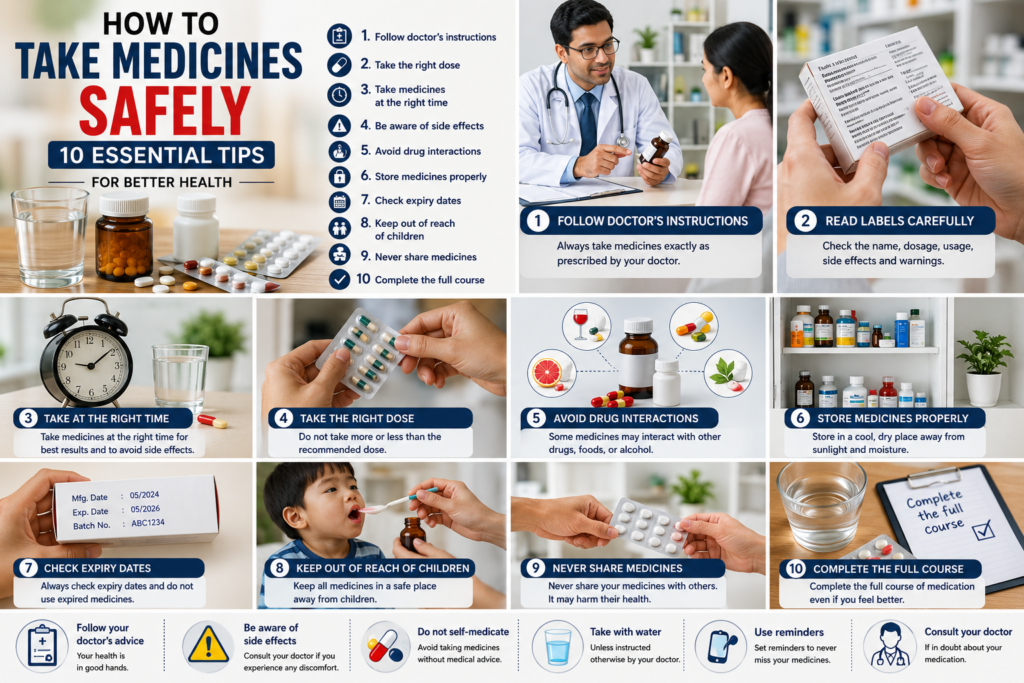
Always Follow Your Doctor’s Instructions
One of the most important rules of medication safety is to follow your doctor’s instructions carefully.
Key Points to Remember
- Take the exact dose prescribed.
- Follow the recommended schedule.
- Complete the full course of treatment, especially antibiotics.
- Never stop taking medicines without consulting your doctor.
Even if you start feeling better, stopping medication too early may allow symptoms to return or worsen.
“How to Take Medicines Safely”
Read Medicine Labels Carefully
Medicine labels provide important information about:
- Dosage instructions
- Expiry date
- Storage requirements
- Possible side effects
- Warnings and precautions
Before taking any medication, read the label carefully and make sure you understand all instructions.
Check for:
- Correct medicine name
- Correct strength
- Expiry date
- Usage directions
If anything seems unclear, consult a healthcare professional.
“How to Take Medicines Safely”
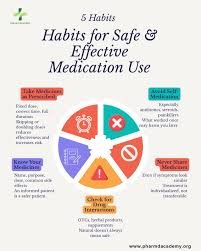
Take the Correct Dose
Taking too much or too little medication can be harmful.
Avoid These Common Mistakes
- Guessing the dosage
- Using household spoons for liquid medicines
- Doubling a missed dose without medical advice
- Taking medicine more frequently than prescribed
Always use the measuring cup, spoon, or syringe provided with the medicine.
“How to Take Medicines Safely”
Know the Right Time to Take Your Medicine
Some medicines work best when taken:
- Before meals
- After meals
- With food
- On an empty stomach
- At bedtime
Following the correct timing helps ensure maximum effectiveness and reduces the risk of side effects.
Using reminders or smartphone alarms can help you stay on schedule.
“How to Take Medicines Safely”
Never Share Medicines
A medicine prescribed for one person may not be safe for another.
Different people have:
- Different medical conditions
- Different allergies
- Different body weights
- Different medication requirements
Never give your medicine to someone else, even if they have similar symptoms.
Be Aware of Drug Interactions
Some medicines can interact with:
- Other medications
- Vitamins
- Herbal supplements
- Certain foods and drinks
Common Examples
- Alcohol may interact with many medications.
- Some antibiotics may interact with dairy products.
- Certain blood pressure medicines can interact with grapefruit.
Always inform your doctor about every medicine and supplement you are taking.
Complete Your Antibiotic Course
Antibiotics are commonly prescribed for bacterial infections.
Important Tips
- Take antibiotics exactly as prescribed.
- Do not skip doses.
- Complete the entire course.
- Never save antibiotics for future use.
Stopping antibiotics early can contribute to antibiotic resistance, making infections harder to treat.
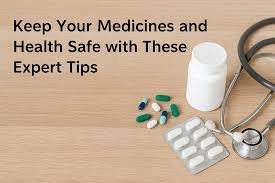
Store Medicines Properly
Proper storage helps maintain the effectiveness and safety of medications.
Best Storage Practices
- Store medicines in a cool, dry place.
- Keep them away from direct sunlight.
- Avoid storing medicines in bathrooms where humidity is high.
- Keep medicines in their original packaging.
Some medicines require refrigeration. Always follow storage instructions on the label.
Check Expiry Dates Regularly
Expired medicines may:
- Lose effectiveness
- Become unsafe
- Fail to treat your condition properly
Inspect your medicine cabinet regularly and safely dispose of expired products.
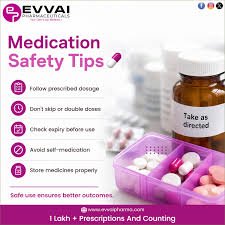
Keep Medicines Out of Children’s Reach
Children are naturally curious and may accidentally consume medications.
Safety Tips
- Store medicines in locked cabinets.
- Use child-resistant packaging.
- Never refer to medicine as candy.
- Keep medications out of sight and reach.
These precautions can help prevent accidental poisoning.
Know the Possible Side Effects
Every medicine has the potential to cause side effects.
Common side effects may include:
- Nausea
- Dizziness
- Drowsiness
- Headache
- Stomach upset
Contact your healthcare provider if you experience severe or unusual symptoms after taking a medication.
Seek emergency medical attention if you experience:
- Difficulty breathing
- Severe allergic reactions
- Swelling of the face or throat
- Chest pain
Do Not Self-Medicate Frequently
While some over-the-counter medicines are safe when used properly, frequent self-medication can be risky.
Potential dangers include:
- Incorrect diagnosis
- Delayed medical treatment
- Drug interactions
- Increased side effects
Consult a healthcare professional if symptoms persist or worsen.
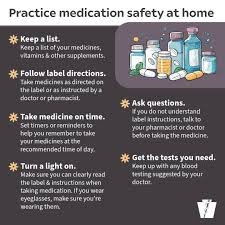
Create a Medication List
Keeping a record of your medicines can help prevent mistakes.
Include:
- Medicine name
- Dosage
- Frequency
- Purpose
- Doctor’s name
This list can be useful during doctor visits or emergencies.
Tips for Elderly Patients
Older adults often take multiple medications and may be more vulnerable to medication-related problems.
Helpful Practices
- Use pill organizers.
- Set medication reminders.
- Schedule regular medication reviews.
- Keep a current medication list.
Family members and caregivers can also assist with medication management.
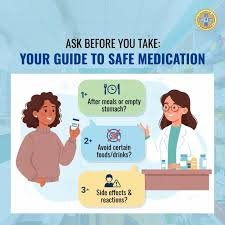
Safe Use of Over-the-Counter Medicines
OTC medicines can help treat minor conditions such as:
- Fever
- Cough
- Cold
- Allergies
- Pain
Even though they are available without a prescription, they should still be used responsibly.
Always:
- Read instructions carefully.
- Follow recommended doses.
- Avoid mixing medications unnecessarily.
When to Consult a Doctor
Seek medical advice if:
- Symptoms do not improve.
- Side effects become severe.
- You miss multiple doses.
- You are pregnant or breastfeeding.
- You are taking multiple medications.
Professional guidance ensures safe and effective treatment.
Conclusion
Taking medicines safely is essential for protecting your health and achieving the best treatment outcomes. Always follow your doctor’s instructions, read medicine labels carefully, store medications properly, and remain aware of possible side effects and interactions.
By adopting safe medication practices, you can reduce risks, improve treatment effectiveness, and support your overall well-being. Whether you are taking prescription medicines, over-the-counter drugs, or supplements, responsible use is the key to staying healthy and safe.


Leave Your Comment