

Difference Between Prescription and OTC Medicines
- June 13, 2026
- 0 Likes
- 37 Views
- 0 Comments
Difference Between Prescription and OTC Medicines
Introduction
Medicines play a vital role in maintaining health and treating various medical conditions. When purchasing medications, you may notice that some require a doctor’s prescription while others can be bought directly from a pharmacy. Understanding the difference between prescription and OTC medicines is essential for safe and effective treatment.
Prescription medicines and over-the-counter (OTC) medicines are both used to prevent, manage, and treat health conditions. However, they differ in terms of safety requirements, medical supervision, availability, and potential risks.
This guide explains the key differences between prescription and OTC medicines, their advantages, limitations, and how to use them safely.
What Are Prescription Medicines?
Difference Between Prescription and OTC Medicines
Prescription medicines are medications that can only be obtained with a valid prescription from a qualified healthcare professional.
These medicines are typically used for:
- Serious infections
- Chronic diseases
- High blood pressure
- Diabetes
- Asthma
- Mental health conditions
Doctors prescribe these medications after evaluating a patient’s symptoms, medical history, and overall health.
Examples of Prescription Medicines
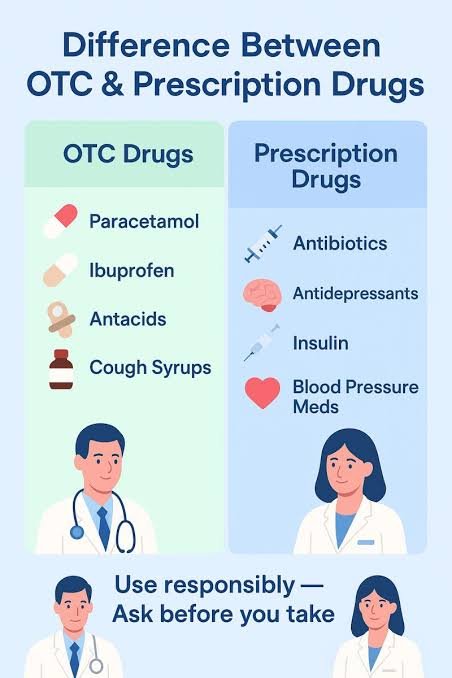
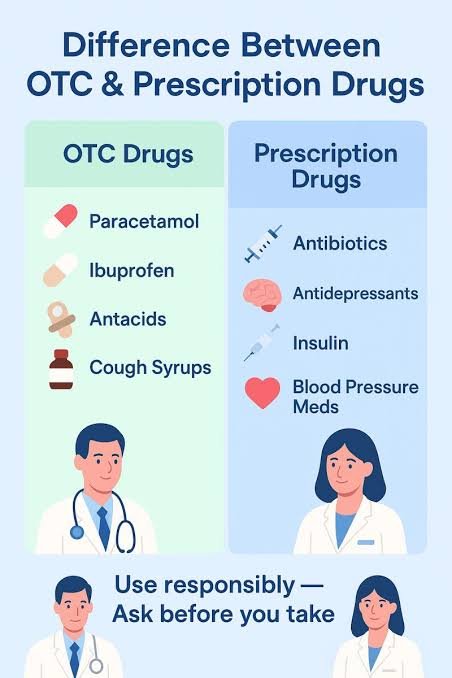
- Antibiotics
- Blood pressure medications
- Insulin
- Certain pain medications
- Antidepressants
Prescription medicines often require medical monitoring to ensure safety and effectiveness.
What Are OTC Medicines?
OTC (Over-the-Counter) medicines are medications that can be purchased without a doctor’s prescription.
These medicines are generally considered safe when used according to the instructions on the label.
Common OTC Medicines
- Paracetamol
- Antacids
- Cough syrups
- Allergy medicines
- Cold and flu medications
- Vitamin supplements
OTC medicines are commonly used for minor illnesses and temporary symptoms.
10 Important Differences Between Prescription and OTC Medicines
1. Availability
Prescription Medicines
- Require a doctor’s prescription.
OTC Medicines
- Available directly at pharmacies and medical stores.
2. Medical Supervision How to Take Medicines Safely: A Complete Guide
Difference Between Prescription and OTC Medicines
Prescription Medicines
- Used under medical guidance.
OTC Medicines
- Can be used without direct supervision.
3. Strength and Potency
Prescription medicines often contain stronger ingredients and higher dosages than OTC medicines.
4. Safety Monitoring
Doctors monitor prescription medications for effectiveness and side effects.
OTC medicines rely on users following label instructions correctly.
5. Treatment Purpose
Prescription medicines are commonly used for serious or chronic conditions.
OTC medicines are generally intended for minor symptoms and short-term relief.
6. Risk of Side Effects
Prescription medicines may have a higher risk of side effects and drug interactions.
OTC medicines can also cause side effects if misused.
7. Cost
Prescription medicines may involve additional healthcare costs such as doctor consultations.
OTC medicines are usually less expensive and more accessible.
8. Dosage Requirements
Prescription medicines often require personalized dosage instructions.
OTC medicines provide standardized dosing recommendations.
9. Regulation
Prescription medicines undergo strict regulatory review and monitoring.
OTC medicines must also meet safety standards but are approved for self-use.
10. Misuse Potential
Improper use of prescription medicines can lead to serious health risks.
OTC medicines can also be harmful when taken incorrectly or excessively.
Benefits of Prescription Medicines
- Target specific medical conditions
- Personalized treatment plans
- Professional medical supervision
- Effective management of chronic diseases
Benefits of OTC Medicines
- Easy accessibility
- Convenient symptom relief
- Lower cost
- Useful for minor health issues
Safety Tips for Using Any Medicine
Follow Instructions Carefully
Always read labels and dosage instructions before taking medication.
Avoid Self-Medication
Consult a healthcare professional if symptoms persist.
Check Expiry Dates
Never use expired medicines.
Inform Your Doctor
Tell your doctor about all medicines and supplements you are taking.
Store Medicines Properly
Keep medicines in a cool, dry place away from children.
Internal Links
- How to Take Medicines Safely: 10 Essential Tips for Better Health
- Common Side Effects of Medicines and Proven Solutions That Work
- Importance of Completing Your Antibiotic Course
- How to Read Medicine Labels Correctly
- Medicine Expiry Dates: What You Need to Know
- How to Store Medicines Properly at Home
External Resources
- World Health Organization (WHO) Medicines Information
- MedlinePlus Drug Information
- U.S. Food and Drug Administration (FDA) Consumer Drug Information
Conclusion
Understanding the difference between prescription and OTC medicines helps patients make informed healthcare decisions. Prescription medicines require professional supervision and are used for more serious conditions, while OTC medicines provide convenient relief for common health issues. Regardless of the type of medication, responsible use, proper dosage, and following healthcare advice are essential for achieving the best treatment outcomes.


Leave Your Comment