

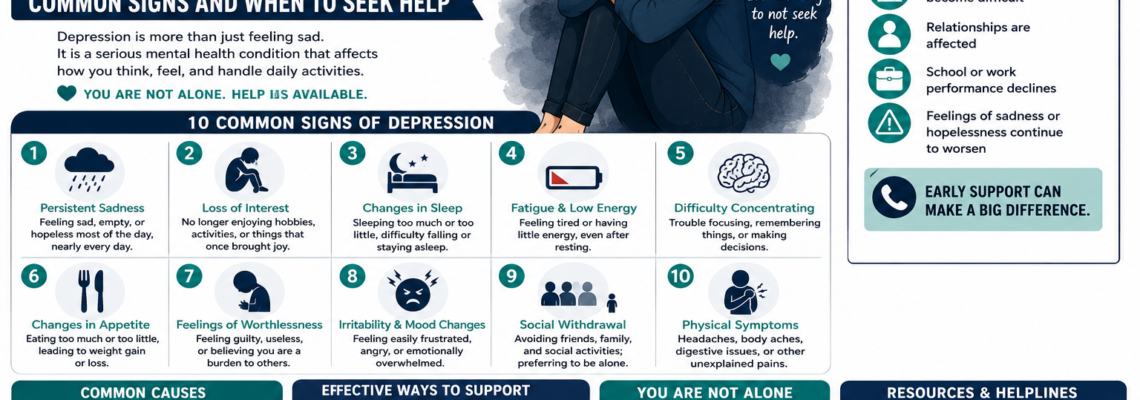
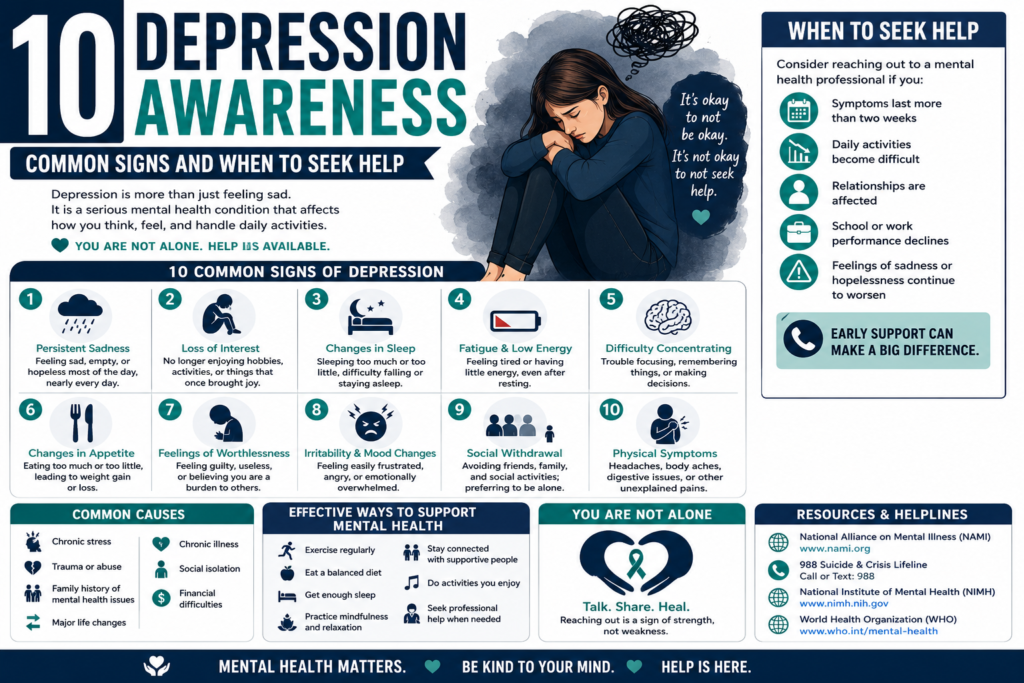
10 Depression Awareness: Common Signs and When to Seek Help
- June 9, 2026
- 0 Likes
- 22 Views
- 0 Comments
What Is Depression? https://www.who.int/health-topics/mental-health
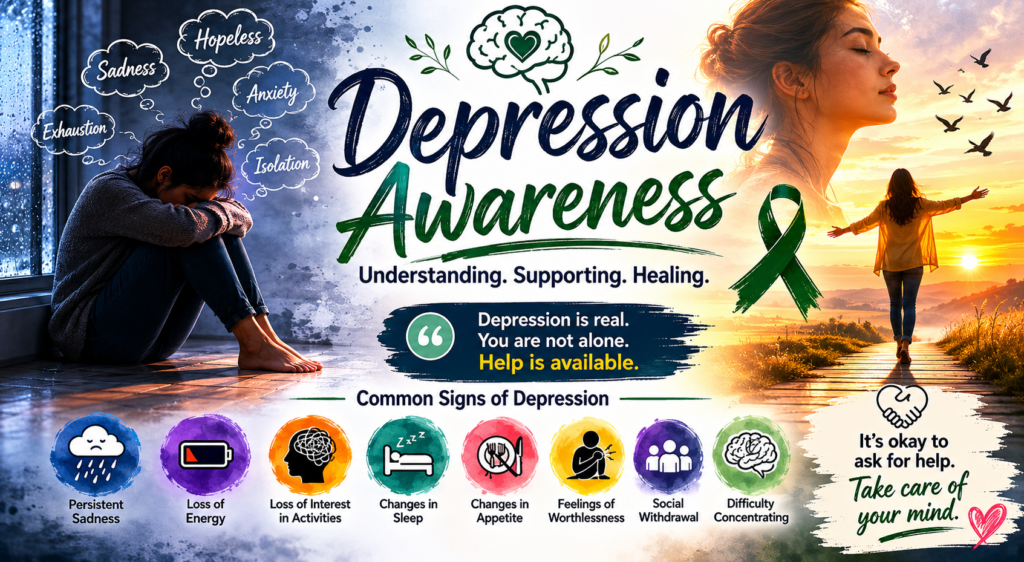
Depression Awareness
Depression is a mental health condition characterized by persistent feelings of sadness, hopelessness, and loss of interest in activities once enjoyed. It can affect people of all ages and backgrounds.
Depression may develop gradually or appear after a stressful life event. Symptoms can vary from person to person and may range from mild to severe.
Common types of depression include:
- Major Depressive Disorder (MDD)
- Persistent Depressive Disorder (Dysthymia)
- Seasonal Affective Disorder (SAD)
- Postpartum Depression
- Bipolar Depression
Understanding the signs can help individuals recognize when additional support may be needed.
1. Persistent Sadness or Low Mood
Depression Awareness
One of the most common symptoms of depression is an ongoing feeling of sadness, emptiness, or hopelessness.
Common Signs
- Feeling down most of the day
- Frequent crying
- Feeling emotionally numb
- Loss of optimism about the future
Unlike temporary sadness, depressive feelings often persist for weeks or months.
Depression Awareness
2. Loss of Interest in Activities
Loss of Interest in Activities
People experiencing depression may lose interest in hobbies, social activities, sports, or entertainment that they previously enjoyed.
Examples
- Avoiding favorite hobbies
- Lack of motivation
- Reduced enjoyment of social interactions
- Loss of excitement about future plans
This symptom is often referred to as “anhedonia.”
3. Loss of Interest in Activities
People experiencing depression may lose interest in hobbies, social activities, sports, or entertainment that they previously enjoyed.
Examples
- Avoiding favorite hobbies
- Lack of motivation
- Reduced enjoyment of social interactions
- Loss of excitement about future plans
This symptom is often referred to as “anhedonia.”
4. Fatigue and Low Energy
Many individuals with depression experience constant exhaustion.
Common Experiences
- Feeling tired throughout the day
- Reduced motivation
- Difficulty completing routine tasks
- Lack of physical energy
Even simple activities may feel overwhelming.
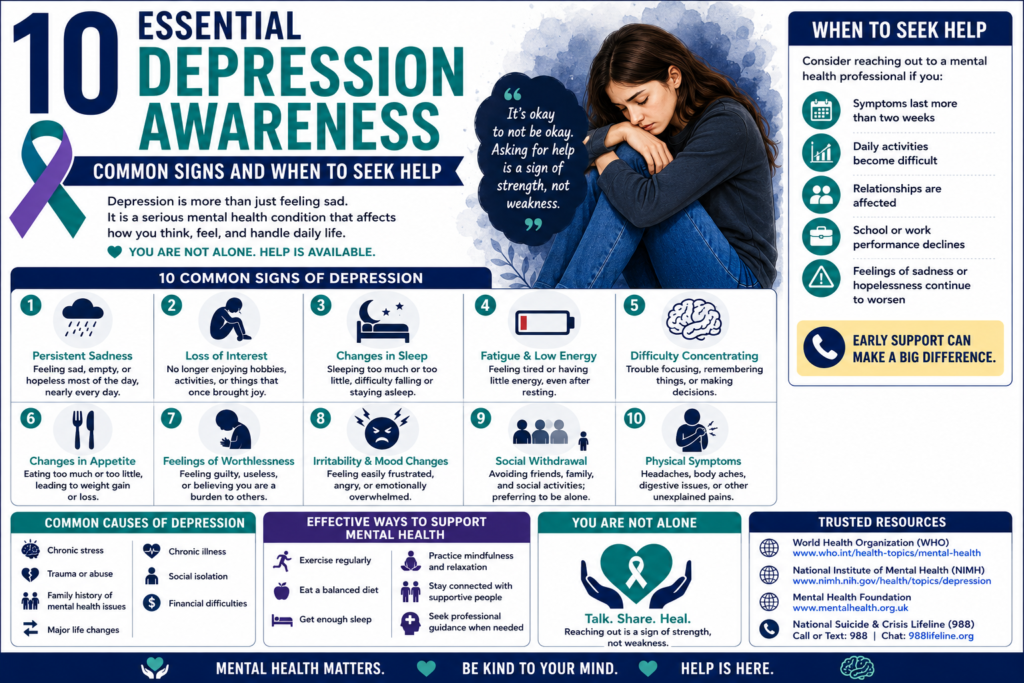
5. Difficulty Concentrating
Depression can affect cognitive functioning and mental clarity.
Symptoms
- Trouble focusing
- Forgetfulness
- Difficulty making decisions
- Reduced productivity
Students and professionals may notice declining performance due to concentration problems.
6. Changes in Appetite
Depression can affect cognitive functioning and mental clarity.
Symptoms
- Trouble focusing
- Forgetfulness
- Difficulty making decisions
- Reduced productivity
Students and professionals may notice declining performance due to concentration problems.
7. Feelings of Worthlessness
People experiencing depression may develop negative beliefs about themselves.
Common Thoughts
- Feeling like a burden
- Excessive self-criticism
- Persistent guilt
- Low self-esteem
These thoughts can become overwhelming if left unaddressed.
8. Irritability and Mood Changes
Depression does not always appear as sadness. Some individuals experience increased irritability, frustration, or anger.
Examples
- Becoming easily annoyed
- Increased emotional sensitivity
- Frequent mood swings
- Reduced patience
This symptom is especially common among teenagers and young adults.
9. Social Withdrawal
Depression does not always appear as sadness. Some individuals experience increased irritability, frustration, or anger.
Examples
- Becoming easily annoyed
- Increased emotional sensitivity
- Frequent mood swings
- Reduced patience
This symptom is especially common among teenagers and young adults.
Common Causes of Depression
Depression often develops due to multiple contributing factors.
Biological Factors
- Genetics
- Hormonal changes
- Brain chemistry
Psychological Factors
- Low self-esteem
- Chronic stress
- Trauma
Environmental Factors
- Financial difficulties
- Relationship problems
- Social isolation
- Major life transitions
Understanding these risk factors can help individuals recognize potential triggers.
How Depression Affects Daily Life
Depression can impact many areas of life:
Relationships
Communication difficulties and emotional withdrawal may affect friendships and family relationships.
Education
Students may experience reduced concentration and academic performance.
Work Performance
Depression can affect productivity, motivation, and attendance.
Physical Health
Long-term depression may contribute to sleep disturbances, fatigue, and other physical symptoms.
Depression Myths vs Facts
Myth: Depression is simply sadness.
Fact: Depression is a complex mental health condition that affects thoughts, emotions, and physical health.
Myth: People should just “snap out of it.”
Fact: Depression often requires support, treatment, and healthy coping strategies.
Myth: Depression only affects adults.
Fact: Depression can affect children, teenagers, and adults.
Myth: Seeking help is a sign of weakness.
Fact: Seeking support demonstrates strength and self-awareness.
Healthy Ways to Support Mental Wellness
Exercise Regularly
Physical activity can improve mood and reduce stress.
Prioritize Sleep
Aim for consistent, high-quality sleep.
Maintain a Balanced Diet
Nutritious foods support brain health and emotional well-being.
Practice Mindfulness
Mindfulness techniques can help reduce stress and improve emotional awareness.
Stay Connected
Supportive relationships can provide comfort during difficult times.


Leave Your Comment