

10 Early Signs of Diabetes You Should Never Ignore
- June 28, 2026
- 0 Likes
- 28 Views
- 0 Comments
Early Signs of Diabetes
Diabetes is one of the most common chronic health conditions worldwide, affecting millions of people. Many individuals live with diabetes for months or even years without realizing they have it because the early symptoms are often mild or develop gradually.
Recognizing these warning signs early can help prevent serious complications involving the heart, kidneys, eyes, nerves, and blood vessels. Early diagnosis also allows treatment to begin before significant damage occurs.
What Is Diabetes?
Early Signs of Diabetes
Diabetes is a condition in which the body cannot properly regulate blood glucose (blood sugar) levels.
Normally, the hormone insulin helps move glucose from the bloodstream into the body’s cells to provide energy. In diabetes, the body either doesn’t produce enough insulin or cannot use insulin effectively, causing blood sugar levels to remain high.
Main Types of Diabetes
- Type 1 Diabetes
- Type 2 Diabetes
- Gestational Diabetes
Type 2 diabetes is the most common form and often develops gradually over time.
1. Frequent Urination
Early Signs of Diabetes
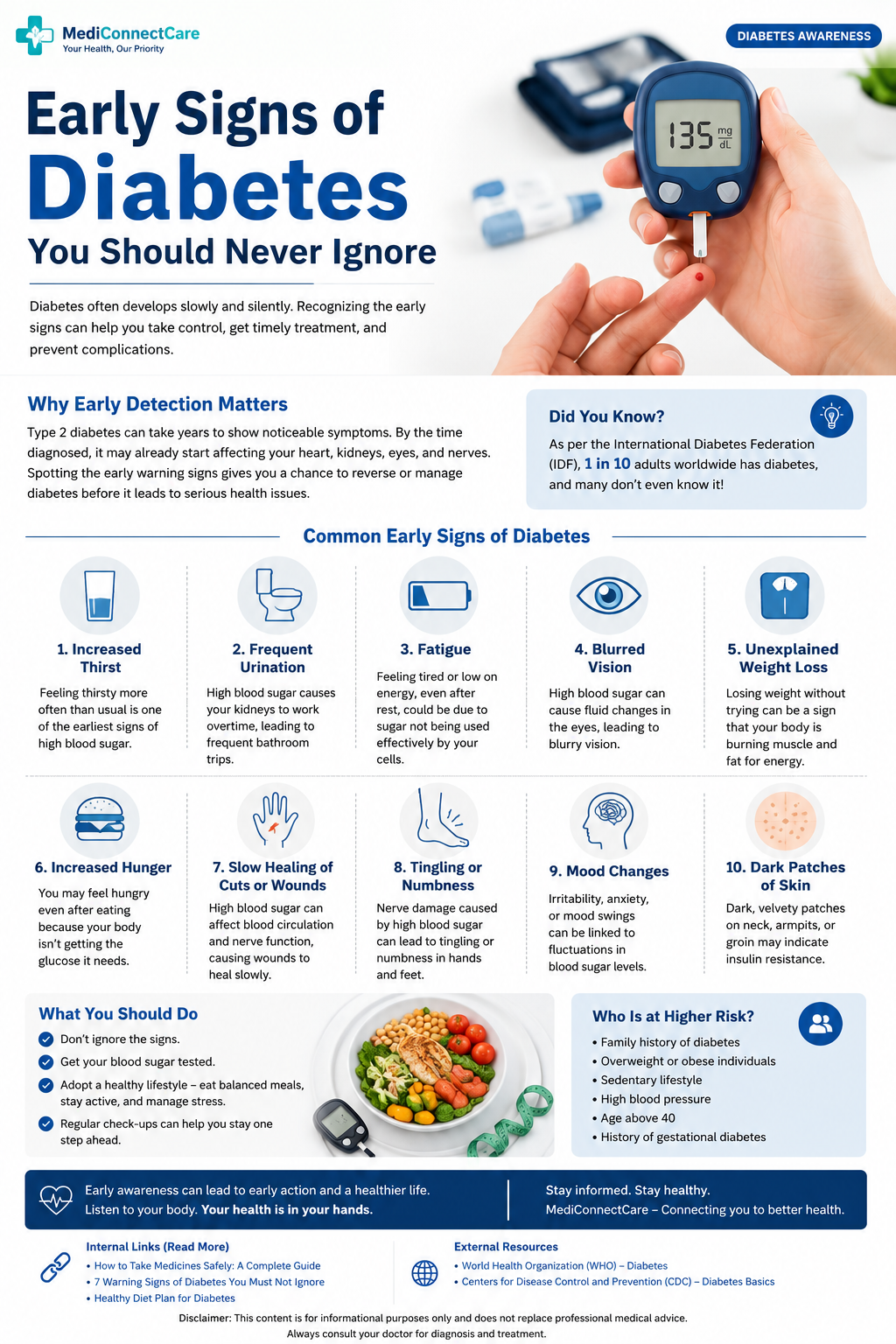
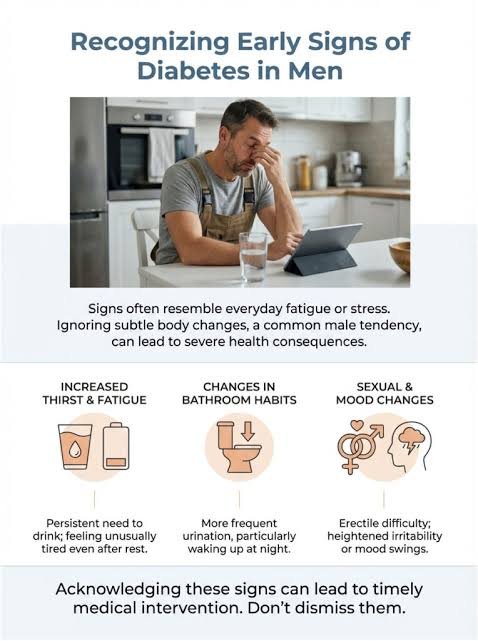
One of the earliest signs of diabetes is needing to urinate more often than usual, especially during the night.
High blood sugar causes the kidneys to work harder to remove excess glucose through urine.
2. Increased Thirst https://www.who.int/news-room/fact-sheets/detail/diabetes
Early Signs of Diabetes
Because the body loses more water through frequent urination, dehydration develops.
This causes excessive thirst, even after drinking plenty of water.
3. Constant Hunger /difference-between-prescription-and-otc-medicines/
People with diabetes often feel hungry shortly after eating.
Although blood sugar is high, glucose cannot efficiently enter the body’s cells, leaving them without enough energy.
4. Unexplained Weight Loss
Sudden weight loss without changes in diet or exercise can be an early warning sign.
When cells cannot use glucose, the body starts breaking down fat and muscle for energy.
5. Extreme Fatigue
Feeling tired all the time is another common symptom.
Without enough glucose entering the cells, the body cannot produce energy efficiently.
6. Blurred Vision
High blood sugar can temporarily affect the lenses of the eyes, causing blurry vision.
Long-term uncontrolled diabetes can also damage the retina.
7. Slow-Healing Wounds
Cuts, bruises, and infections may take much longer to heal.
Poor circulation and weakened immune function are common reasons.
8. Frequent Infections
People with diabetes are more likely to develop:
- Skin infections
- Gum infections
- Urinary tract infections
- Yeast infections
High blood sugar creates an environment where bacteria and fungi thrive.
9. Tingling or Numbness
High blood sugar can damage nerves.
You may notice:
- Tingling
- Burning sensation
- Numbness
- Pain in hands or feet
This condition is called diabetic neuropathy.
10. Dark Patches of Skin
Dark, velvety skin around the neck, armpits, or groin can be a sign of insulin resistance.
This condition is known as Acanthosis Nigricans.
Risk Factors
Your risk of developing diabetes increases if you:
- Are overweight or obese
- Have a family history of diabetes
- Exercise very little
- Have high blood pressure
- Have high cholesterol
- Smoke
- Are over 45 years old (risk increases with age)
- Have a history of gestational diabetes
How Is Diabetes Diagnosed?
Doctors may recommend:
- Fasting Blood Sugar Test
- HbA1c Test
- Random Blood Sugar Test
- Oral Glucose Tolerance Test
Can Diabetes Be Prevented?
Many cases of Type 2 diabetes can be prevented by:
- Eating a balanced diet
- Maintaining a healthy weight
- Exercising at least 150 minutes per week
- Avoiding smoking
- Limiting sugary drinks
- Getting regular health check-ups
- Managing stress
- Sleeping 7–9 hours each night
When Should You See a Doctor?
Consult a healthcare professional if you notice:
- Excessive thirst
- Frequent urination
- Unexplained weight loss
- Persistent fatigue
- Blurred vision
- Slow-healing wounds
- Tingling or numbness
Early diagnosis can help prevent serious complications.
Possible Complications if Left Untreated
Untreated diabetes can lead to:
- Heart disease
- Stroke
- Kidney disease
- Vision loss
- Nerve damage
- Foot ulcers
- Increased risk of infections
Frequently Asked Questions
Can diabetes develop without symptoms?
Yes. Many people, especially those with Type 2 diabetes, may have no noticeable symptoms in the early stages. Routine health screenings are important for those at higher risk.
Is diabetes curable?
There is currently no cure for diabetes, but it can often be managed effectively through healthy lifestyle changes, medication, and regular medical care. Some people with Type 2 diabetes can achieve remission through significant weight loss and sustained lifestyle improvements under medical supervision.
Which symptom appears first?
Frequent urination, increased thirst, and persistent fatigue are among the earliest symptoms, though the order and severity can vary from person to person.
Can young people develop diabetes?
Yes. Both children and adults can develop diabetes. Type 1 diabetes often begins in childhood or adolescence, while Type 2 diabetes is increasingly seen in younger people due to factors such as obesity and physical inactivity.
Conclusion
Diabetes often develops gradually, making its early symptoms easy to overlook. Paying attention to signs like frequent urination, excessive thirst, constant hunger, fatigue, blurred vision, and slow-healing wounds can lead to earlier diagnosis and better long-term health outcomes.
If you experience these symptoms or have risk factors for diabetes, consult a qualified healthcare professional for evaluation. Early detection and proper management can reduce the risk of serious complications and help you maintain a healthier life.
Suggested Image Alt Text: Person experiencing early signs of diabetes such as excessive thirst, fatigue, and blurred vision.
Internal Link Ideas:
- Difference Between Prescription and OTC Medicines
- How to Take Medicines Safely
- Importance of Regular Health Checkups
- Best Foods to Boost Immunity
- Understanding High Blood Pressure


Leave Your Comment