

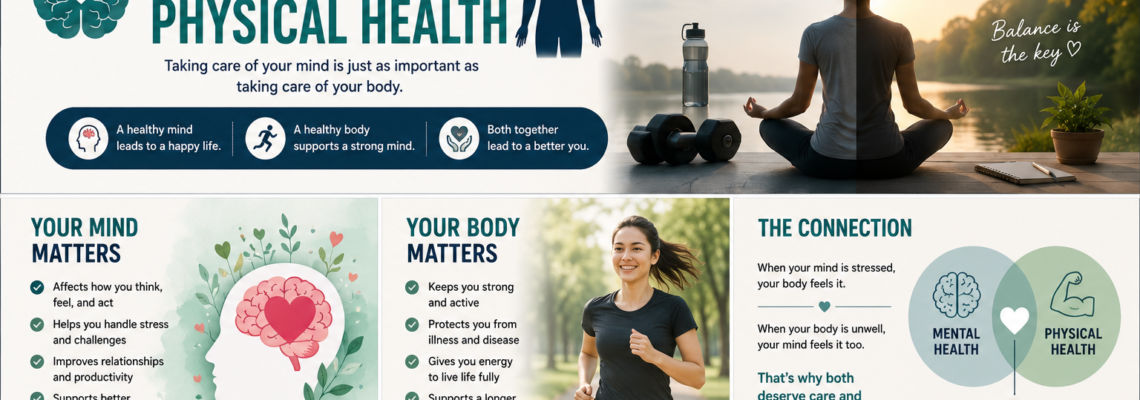
2 Why Mental Health Is Just as Important as Physical Health
- June 4, 2026
- 0 Likes
- 24 Views
- 0 Comments
Introduction
Mental Health and Physical Health
When people think about health, they often focus on physical fitness, nutrition, and preventing illnesses. However, health is more than just the condition of our bodies. Mental health plays an equally important role in determining our overall well-being, quality of life, and ability to function effectively every day.
Mental health influences how we think, feel, behave, handle stress, build relationships, and make decisions. Just as physical health problems can affect daily life, mental health challenges can significantly impact emotional, social, and physical well-being.
Understanding why mental health is just as important as physical health can encourage individuals to prioritize self-care and seek support when needed.
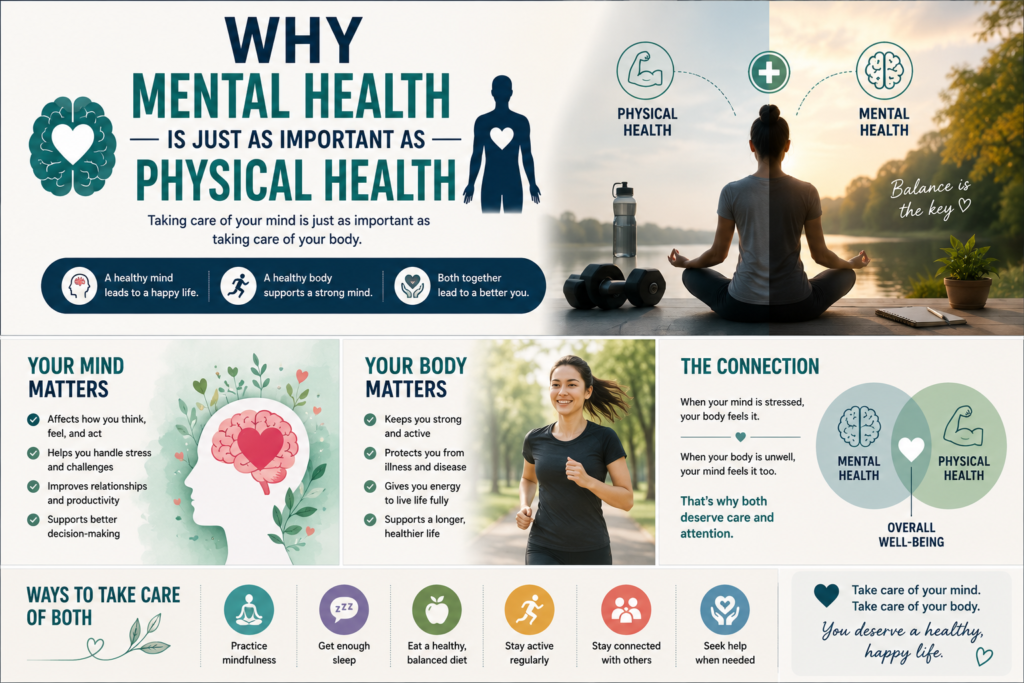
What Is Mental Health? https://www.who.int/health-topics/mental-health
Mental Health and Physical Health
Mental health refers to a person’s emotional, psychological, and social well-being. It affects how individuals cope with life’s challenges, interact with others, and make important decisions.
Good mental health does not mean feeling happy all the time. Instead, it means having the ability to manage stress, recover from setbacks, maintain healthy relationships, and enjoy life despite occasional difficulties.
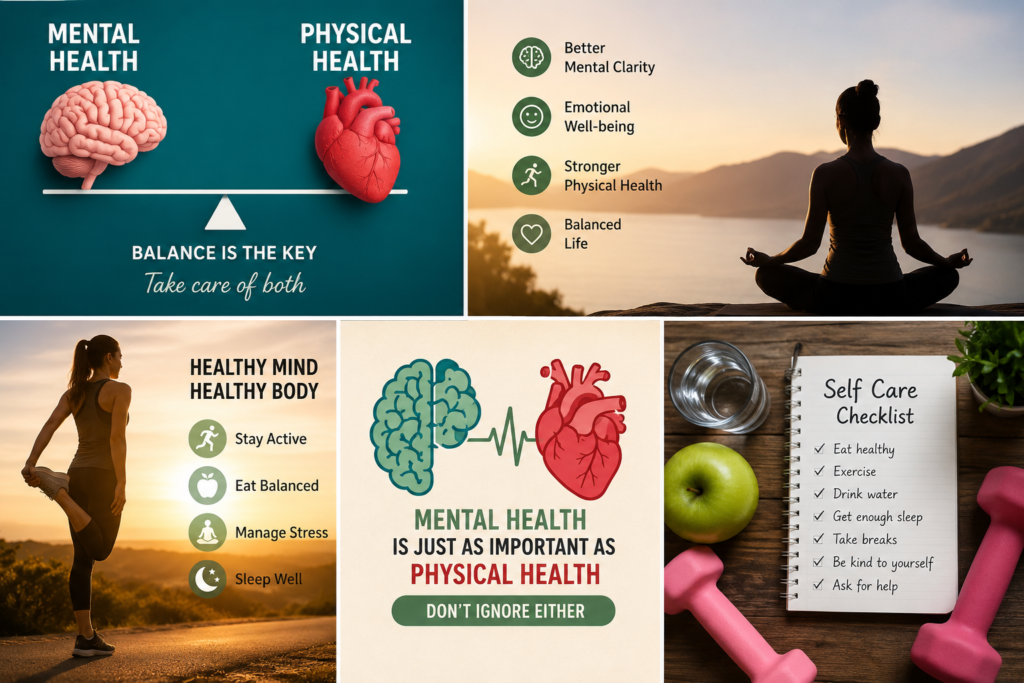
The Strong Connection Between Mental and Physical Health Mental Health Awareness Gains Momentum in India in 2025
Mental Health and Physical Health
Mental and physical health are deeply connected. Problems affecting one area often impact the other.
For example:
- Chronic stress can increase blood pressure.
- Anxiety may cause headaches and muscle tension.
- Depression can lead to fatigue and low energy.
- Poor sleep can negatively affect both mental and physical health.
- Physical illnesses can increase emotional distress and anxiety.
This close relationship highlights the importance of caring for both the mind and body.
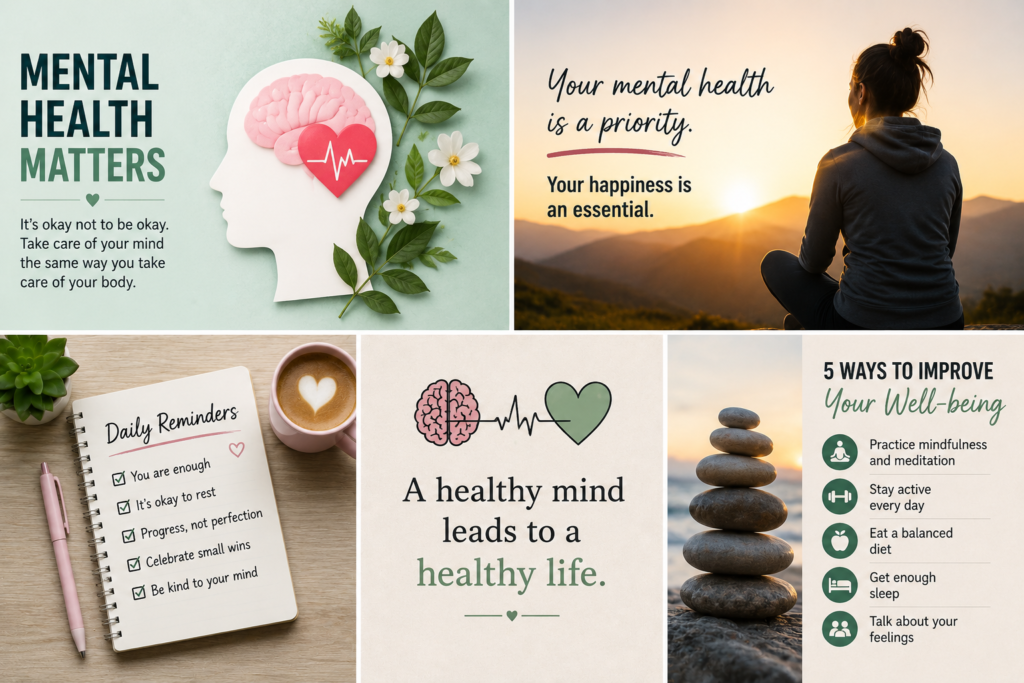
How Mental Health Affects Daily Life
1. Improves Relationships
Mental Health and Physical Health
Good mental health helps people communicate effectively, build trust, and maintain healthy relationships with family, friends, and colleagues.
2. Enhances Productivity
Individuals with positive mental well-being are often better able to focus, solve problems, and manage responsibilities at school or work.
3. Supports Better Decision-Making
Mental Health and Physical Health
Mental wellness helps people think clearly, evaluate situations, and make informed choices.
4. Helps Manage Stress
Life comes with challenges, but good mental health improves resilience and coping abilities.
5. Increases Overall Happiness
When emotional well-being is prioritized, people are more likely to experience satisfaction and fulfillment in their daily lives.
Signs That Mental Health Needs Attention
Recognizing warning signs early can prevent more serious problems from developing.
Common signs include:
- Persistent sadness
- Excessive worry or anxiety
- Sleep disturbances
- Mood swings
- Social withdrawal
- Loss of interest in favorite activities
- Difficulty concentrating
- Low energy levels
- Changes in appetite
- Unexplained physical symptoms
If these symptoms continue for several weeks, professional support may be beneficial.
Why Ignoring Mental Health Can Be Harmful
Many people ignore emotional struggles because they fear judgment or believe they should handle problems alone.
However, untreated mental health concerns can lead to:
- Reduced productivity
- Relationship difficulties
- Poor physical health
- Increased stress levels
- Lower quality of life
- Difficulty achieving personal goals
Seeking help early can improve outcomes and support long-term wellness.
Simple Ways to Improve Mental Health
Get Regular Exercise
Physical activity releases endorphins that naturally improve mood and reduce stress.
Prioritize Sleep
Aim for 7–9 hours of quality sleep each night.
Eat a Balanced Diet
Nutritious foods provide essential nutrients that support brain function and emotional health.
Stay Connected
Spending time with supportive friends and family can strengthen emotional resilience.
Practice Mindfulness
Meditation, breathing exercises, and mindfulness techniques can help reduce anxiety and improve focus.
Take Breaks
Allow yourself time to rest and recharge when feeling overwhelmed.
Mental Health Myths and Facts
Myth: Mental health only matters when you have a disorder.
Fact: Everyone has mental health, just as everyone has physical health.
Myth: Asking for help is a sign of weakness.
Fact: Seeking support is a responsible and courageous step.
Myth: Mental health problems are uncommon.
Fact: Millions of people worldwide experience mental health challenges every year.
Myth: Mental health issues only affect adults.
Fact: Mental health concerns can affect people of all ages, including children and teenagers.
The Importance of Seeking Help
Just as you would visit a doctor for a physical illness, it’s important to seek professional support when mental health concerns arise.
Early intervention can help individuals:
- Develop healthy coping skills
- Improve emotional well-being
- Strengthen relationships
- Reduce stress and anxiety
- Improve overall quality of life
There is no shame in asking for help when needed.
Conclusion
Mental health is just as important as physical health because it influences every aspect of life, from relationships and productivity to physical well-being and overall happiness. Taking care of your mind is not a luxury—it is a necessity. By prioritizing mental wellness, practicing self-care, and seeking support when needed, individuals can build healthier, happier, and more fulfilling lives.


Leave Your Comment