

Introduction
Understanding Anxiety Symptoms
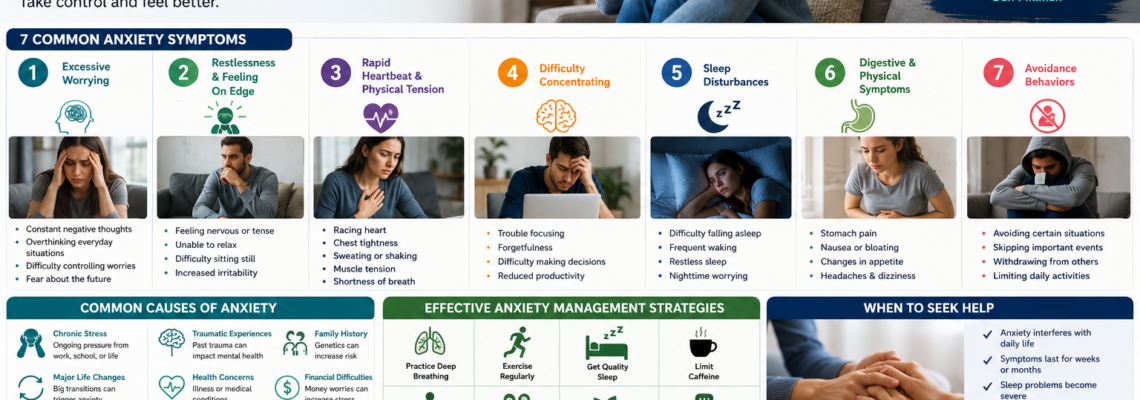
Anxiety is one of the most common mental health challenges affecting people of all ages. While feeling anxious occasionally is a normal response to stressful situations, persistent anxiety can interfere with daily life, relationships, work, and overall well-being.
Understanding anxiety symptoms is important because early recognition can help individuals seek support and develop healthy coping strategies before symptoms become overwhelming. Anxiety can affect both the mind and body, leading to emotional distress as well as physical symptoms.
In this article, we’ll explore seven common anxiety symptoms, their causes, and practical ways to manage them effectively.
What Is Anxiety?
Understanding Anxiety Symptoms
Anxiety is the body’s natural response to stress, uncertainty, or perceived danger. It triggers the “fight-or-flight” response, releasing hormones that prepare the body to react quickly.
While occasional anxiety can be helpful in certain situations, chronic anxiety can negatively impact mental and physical health.
Common anxiety disorders include:
- Generalized Anxiety Disorder (GAD)
- Social Anxiety Disorder
- Panic Disorder
- Specific Phobias
- Separation Anxiety Disorder
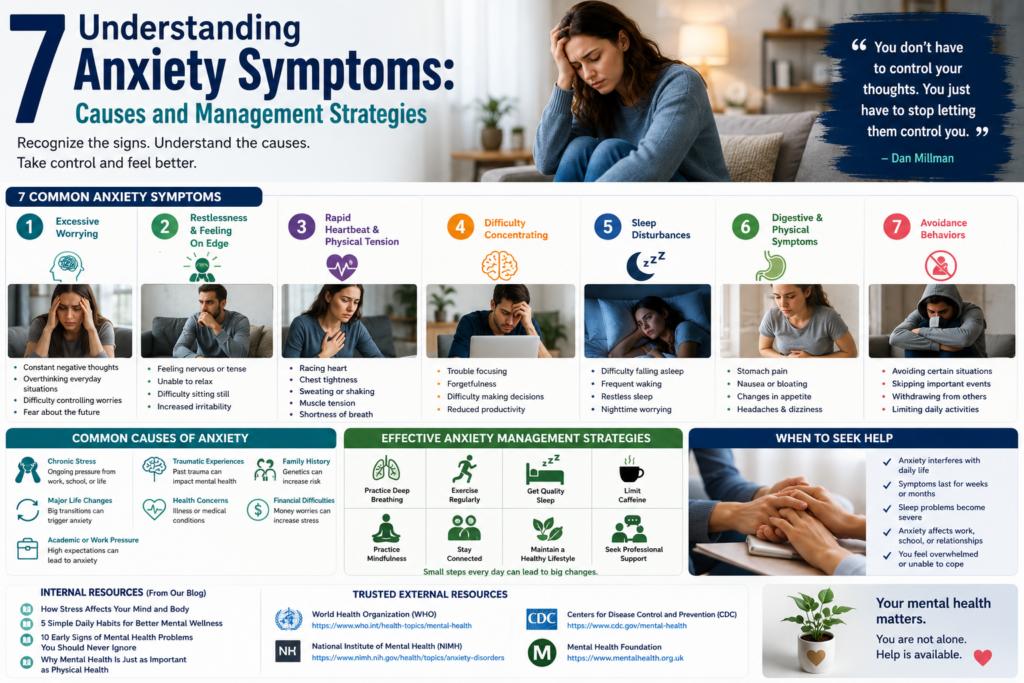
1. Excessive Worrying /how-stress-affects-your-mind-and-body/
Understanding Anxiety Symptoms
#Understanding Anxiety Symptoms
One of the most common anxiety symptoms is constant worrying about everyday situations. People with anxiety often find it difficult to control their worries, even when there is little reason for concern.
Signs of Excessive Worrying
- Constant negative thoughts
- Overthinking everyday situations
- Difficulty controlling worries
- Fear about future events
Impact on Daily Life
Excessive worrying can reduce productivity, affect relationships, and make it difficult to enjoy daily activities.
2. Restlessness and Nervousness https://www.who.int/health-topics/mental-health
Anxiety can cause feelings of restlessness, tension, or being constantly “on edge.” This can make it difficult to relax or enjoy daily activities.
Common Symptoms
- Constant nervous energy
- Feeling tense
- Difficulty sitting still
- Increased irritability
This symptom can make it challenging to focus on tasks or enjoy moments of relaxation.
3. Rapid Heartbeat
Many people experience physical symptoms such as a racing heart, chest tightness, or palpitations during periods of anxiety
.Physical Symptoms Include:
- Rapid heartbeat
- Chest tightness
- Sweating
- Shaking or trembling
- Muscle tension
- Shortness of breath
These symptoms can feel alarming and may sometimes be mistaken for physical health conditions.
4. Difficulty Concentrating
Anxiety can affect focus, memory, and decision-making abilities, making school, work, or daily responsibilities more challenging.
Effects on Concentration
- Trouble focusing
- Forgetfulness
- Difficulty making decisions
- Reduced productivity
When the brain is overwhelmed by anxious thoughts, it becomes harder to concentrate on important tasks.
5. Sleep Problems
People with anxiety often struggle to fall asleep, stay asleep, or achieve restful sleep, leading to fatigue and low energy.
Common Sleep Issues
- Difficulty falling asleep
- Frequent waking during the night
- Restless sleep
- Nighttime worrying
Poor sleep can worsen anxiety symptoms, creating a cycle that affects overall well-being.
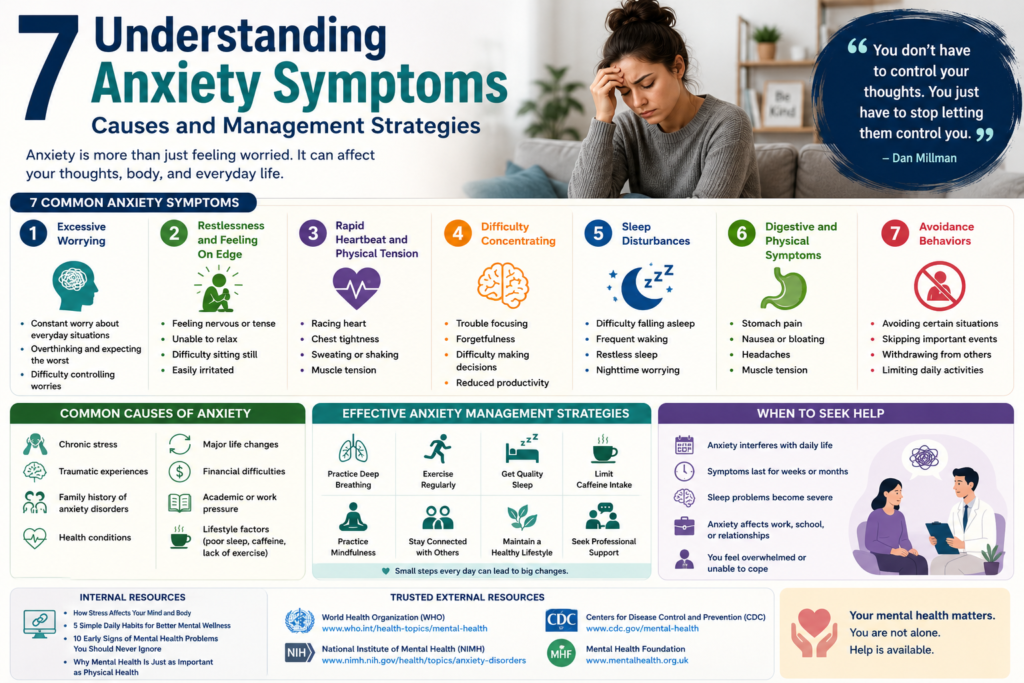
6. Physical Symptoms
Anxiety may cause headaches, muscle tension, stomach discomfort, sweating, trembling, or dizziness.
Physical Effects
- Stomach pain
- Nausea
- Bloating
- Changes in appetite
- Digestive upset
Many people are surprised to learn that anxiety can affect the body just as much as the mind.
7. Avoidance Behaviors
Some individuals avoid situations, places, or activities that trigger anxious feelings, which can interfere with daily life and relatio
How Anxiety Affects Daily Life
Anxiety can impact many aspects of life, including:
Relationships
Constant worry and irritability may affect communication and social interactions.
Academic Performance
Students with anxiety may struggle to focus, participate in class, or complete assignments.
Workplace Productivity
Difficulty concentrating and stress can reduce efficiency and job performance.
Physical Health
Long-term anxiety may contribute to fatigue, headaches, and muscle tension.
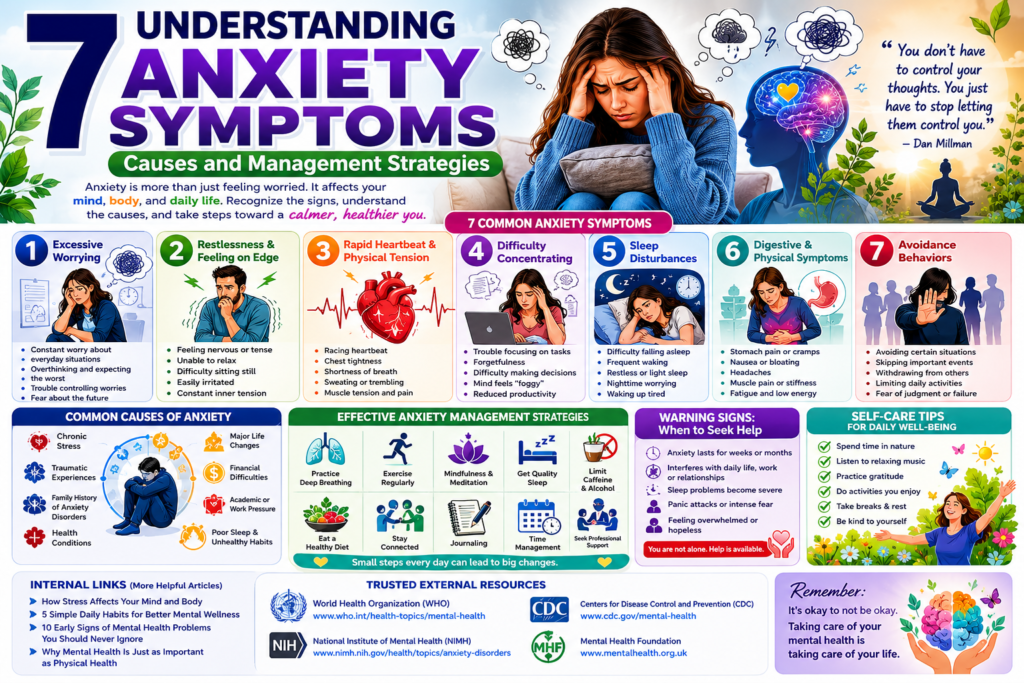
Effective Anxiety Management Strategies
Practice Deep Breathing
Deep breathing exercises can help calm the nervous system and reduce anxiety symptoms.
Exercise Regularly
Physical activity releases endorphins that naturally improve mood.
Get Quality Sleep
Aim for 7–9 hours of sleep each night.
Limit Caffeine
Excessive caffeine may increase nervousness and anxiety.
Practice Mindfulness
Mindfulness techniques can help individuals stay present and reduce overthinking.
Stay Connected
Supportive relationships can provide emotional comfort during difficult times.
Seek Professional Support
Mental health professionals can offer guidance and evidence-based treatment options.
Anxiety Myths vs Facts
Myth: Anxiety is just overthinking.
Fact: Anxiety is a real mental health condition that can affect emotions, thoughts, and physical health.
Myth: Anxiety only affects adults.
Fact: Anxiety can affect children, teenagers, and adults.
Myth: People with anxiety should simply relax.
Fact: Anxiety often requires healthy coping strategies and, in some cases, professional support.


Leave Your Comment