

What Causes High Blood Pressure?
High blood pressure, also known as hypertension, is one of the most common health conditions worldwide. It is often called the “silent killer” because many people have no noticeable symptoms until serious complications develop.
When left untreated, high blood pressure can increase the risk of heart disease, stroke, kidney disease, and vision problems. Understanding what causes high blood pressure can help you take steps to prevent it and protect your long-term health.
What Is High Blood Pressure? # Common Warning Signs You Should Never Ignore
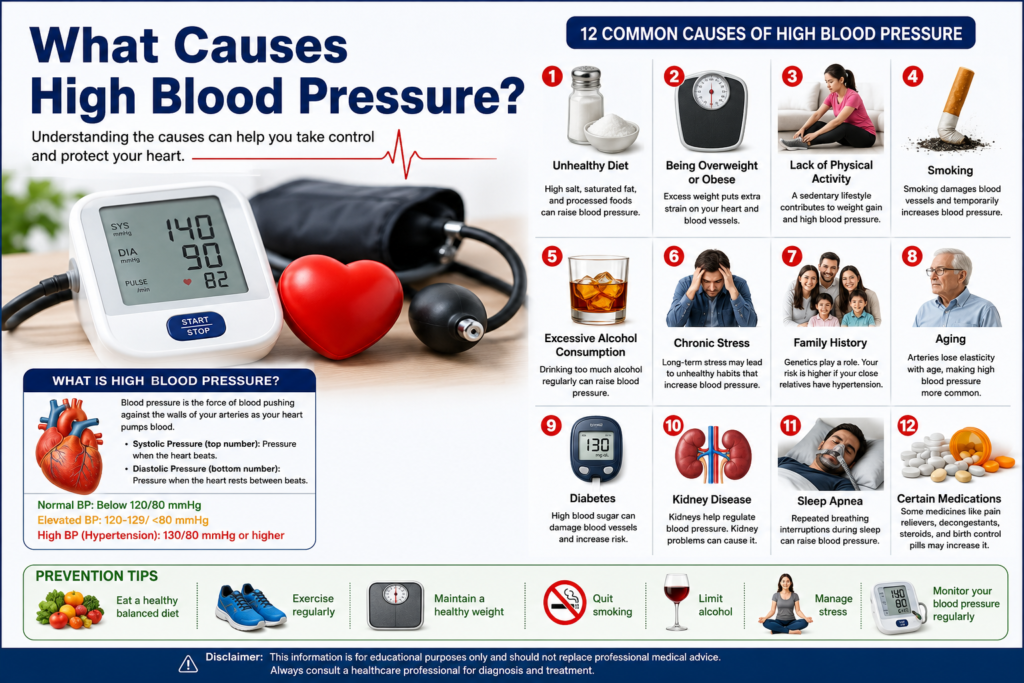
Blood pressure is the force of blood pushing against the walls of your arteries as your heart pumps blood.
It is measured using two numbers:
- Systolic Pressure: Pressure when the heart beats.
- Diastolic Pressure: Pressure when the heart rests between beats.
A healthcare professional uses these measurements to determine whether your blood pressure is within a healthy range.
12 Common Causes of High Blood Pressure https://www.who.int
1. Unhealthy Diet
Eating foods high in salt (sodium), saturated fats, and processed ingredients can increase blood pressure over time.
2. Being Overweight or Obese
Excess body weight forces the heart to work harder to circulate blood, increasing blood pressure.
3. Lack of Physical Activity
A sedentary lifestyle weakens the heart and contributes to weight gain, both of which raise blood pressure.
4. Smoking
Tobacco products damage blood vessels and temporarily increase blood pressure after each cigarette.
5. Excessive Alcohol Consumption
Drinking too much alcohol regularly can contribute to high blood pressure and heart disease.
6. Chronic Stress
Long-term stress may lead to unhealthy habits such as overeating, smoking, or excessive alcohol intake, which can increase blood pressure.
7. Family History
Genetics play a role. If close family members have hypertension, your risk may be higher.
8. Aging
As people get older, arteries naturally become less flexible, making high blood pressure more common.
9. Diabetes
People with diabetes have a higher risk of developing hypertension because high blood sugar can damage blood vessels over time.
10. Kidney Disease
The kidneys help regulate blood pressure. Kidney disease can interfere with this process, leading to hypertension.
11. Sleep Apnea
Repeated interruptions in breathing during sleep can contribute to high blood pressure.
12. Certain Medications
Some medicines, including certain pain relievers, decongestants, corticosteroids, and hormonal medications, may increase blood pressure in some people. Always use medications as directed and consult your healthcare provider if you have concerns.
Risk Factors
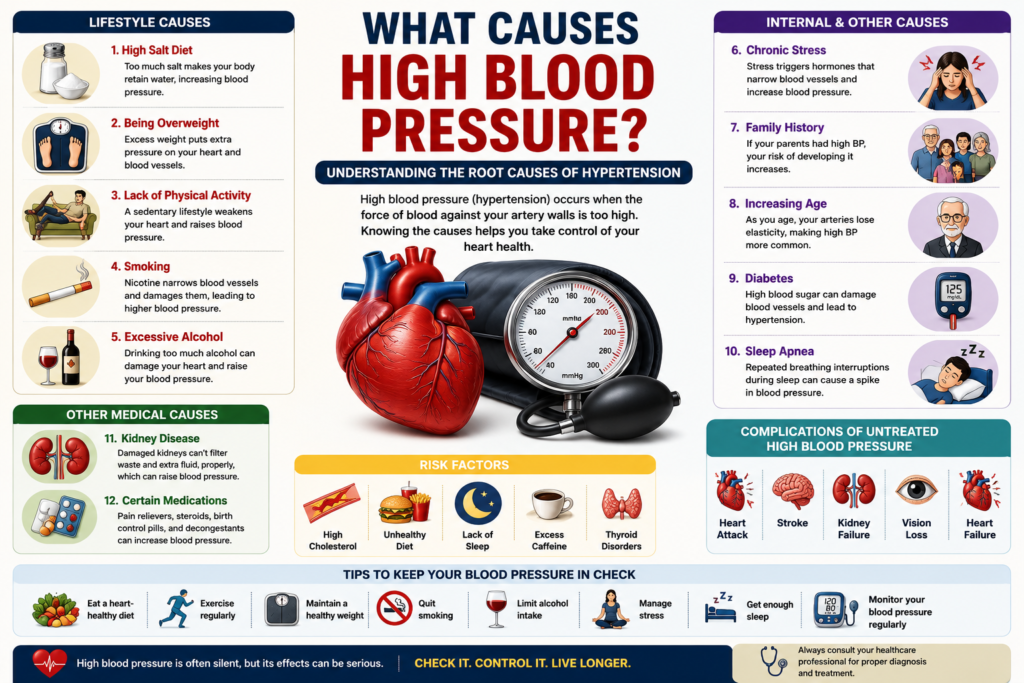
Your risk is higher if you:
- Are over 40 years of age
- Have obesity
- Eat too much salt
- Exercise very little
- Smoke
- Drink excessive alcohol
- Have diabetes
- Have kidney disease
- Experience chronic stress
- Have a family history of hypertension
Symptoms of High Blood Pressure
High blood pressure often has no symptoms.
In some cases, people may experience:
- Severe headaches
- Dizziness
- Blurred vision
- Shortness of breath
- Chest pain
- Nosebleeds (less common)
If you experience chest pain, severe shortness of breath, or symptoms of a stroke, seek emergency medical care immediately.
Possible Complications
Untreated hypertension can lead to:
- Heart attack
- Stroke
- Heart failure
- Kidney damage
- Vision loss
- Peripheral artery disease
- Cognitive decline
How Is High Blood Pressure Diagnosed?
Healthcare providers diagnose hypertension by measuring blood pressure using an appropriate device. Because blood pressure can vary, repeated measurements over time may be needed. Your provider may also recommend blood tests, urine tests, or other evaluations to identify possible underlying causes or complications.
Treatment Options
Treatment depends on the cause and severity of hypertension and may include:
- Healthy eating habits
- Regular physical activity
- Weight management
- Limiting salt intake
- Quitting smoking
- Reducing alcohol intake
- Stress management
- Prescription medications when recommended by a healthcare professional
Always take blood pressure medication exactly as prescribed.
Prevention Tips
You can lower your risk by:
- Eating more fruits and vegetables
- Choosing whole grains
- Limiting processed foods
- Exercising regularly
- Maintaining a healthy weight
- Sleeping 7–9 hours each night
- Managing stress
- Avoiding tobacco products
- Limiting alcohol
- Monitoring your blood pressure regularly if advised by your healthcare provider
When Should You See a Doctor?
Schedule a medical evaluation if:
- Your blood pressure readings remain high on repeated measurements.
- You have a family history of hypertension.
- You experience symptoms such as severe headaches, vision changes, chest pain, or shortness of breath.
- You have diabetes, kidney disease, or other conditions that increase cardiovascular risk.
Frequently Asked Questions
Can stress alone cause high blood pressure?
Stress can temporarily raise blood pressure and may contribute to long-term hypertension when combined with unhealthy lifestyle habits.
Can young adults develop high blood pressure?
Yes. Hypertension can occur at any age, especially in people with obesity, diabetes, kidney disease, or a family history of the condition.
Is high blood pressure curable?
Some cases related to lifestyle factors can improve significantly with healthy habits. Others require ongoing management with lifestyle changes and medication.
How often should I check my blood pressure?
Your healthcare provider can recommend a monitoring schedule based on your age, health status, and risk factors.
Conclusion
High blood pressure often develops without obvious symptoms, making regular checkups essential. Knowing what causes high blood pressure—from unhealthy eating habits and physical inactivity to kidney disease and genetics—can help you make informed choices to protect your heart and overall health.
If you have concerns about your blood pressure or notice persistent high readings, consult a qualified healthcare professional for evaluation and guidance.


Leave Your Comment